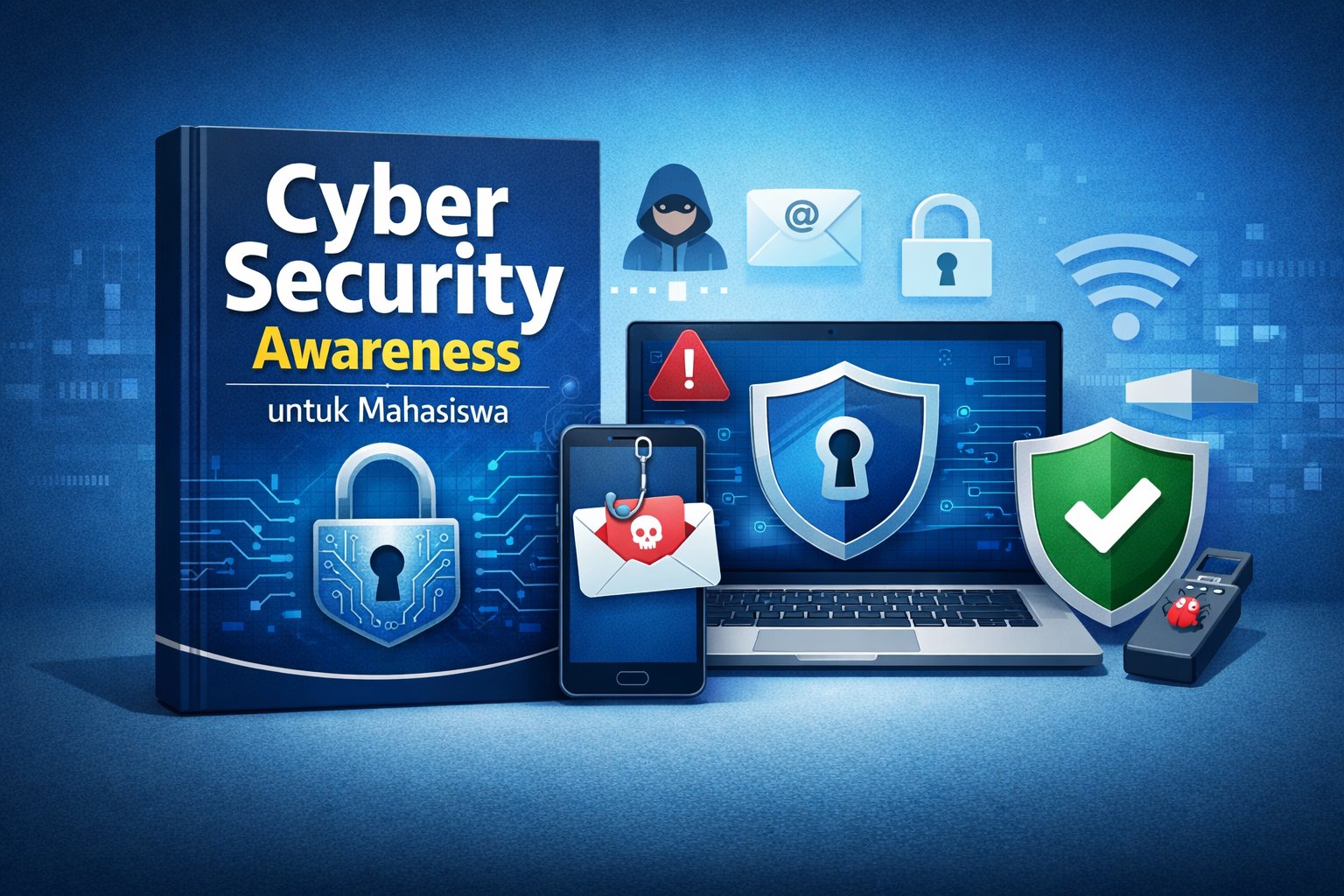

Learn the importance of cyber security awareness for students to avoid cyber threats such as phishing, malware, and data breaches in the digital era.
Introduction
In today’s digital era, students cannot be separated from the use of technology and the internet in their daily lives. From academic activities and communication to digital transactions, everything is conducted online. However, behind this convenience, there are various cyber threats that can endanger user data and privacy.
Cyber security awareness is very important for students to understand risks and protect themselves from cyberattacks. A lack of awareness of digital security often becomes a loophole for cybercriminals to carry out attacks.
What is Cyber Security Awareness?
Cyber security awareness is an individual’s understanding and awareness of the importance of maintaining information security and digital systems. This includes knowledge of cyber threats, how to avoid them, and preventive measures that can be taken.
For students, cyber security awareness is not only important to protect personal data but also to secure academic accounts and campus systems.
Types of Cyber Threats Commonly Experienced by Students
Students are one of the main targets of cyberattacks due to high online activity and low awareness levels. Some common threats include:
Phishing
Phishing is a fraudulent attempt that impersonates a trusted party to steal personal data such as usernames, passwords, or credit card information.
Malware
Malware is malicious software that can damage systems or steal user data.
Social Engineering
A psychological manipulation technique used to obtain confidential information from victims.
Password Attacks
Attacks aimed at guessing or stealing user passwords.
These threats can occur through email, social media, or insecure websites.
The Importance of Cyber Security Awareness for Students
Cyber security awareness plays an important role in students’ lives, including:
Protecting personal data from theft
Preventing account misuse
Avoiding financial losses
Maintaining digital reputation
Supporting campus system security
With high awareness, students can use technology more wisely.
How to Improve Cyber Security Awareness
Students can improve cyber security awareness through the following steps:
Using strong and unique passwords
Avoid using the same password across multiple accounts. Use a combination of letters, numbers, and symbols.
Enabling Multi-Factor Authentication (MFA)
This additional layer of security helps protect accounts from unauthorized access.
Being cautious of phishing
Do not easily trust emails or messages requesting personal data.
Regularly updating devices and applications
System updates can fix existing security vulnerabilities.
Using secure networks
Avoid using public WiFi for sensitive activities such as logging in or making transactions.
Managing data properly
Store important data securely and perform regular backups.
Read Also: Zero Trust Security: Concepts and Implementation in Campus
The Role of Campuses in Increasing Cyber Security Awareness
In addition to individual responsibility, campuses also have a role in improving students’ cyber security awareness. Some actions institutions can take include:
Providing cybersecurity training
Organizing seminars or workshops on cyber security
Implementing system security policies
Providing secure IT infrastructure
Educating students regularly
Collaboration between students and campuses is essential to create a safe digital environment.
The Impact of Low Cyber Security Awareness
Lack of cyber security awareness can lead to various negative impacts, such as:
Personal data breaches
Hacked accounts
Financial losses
Identity misuse
Disruptions to academic activities
Therefore, cyber security awareness must be a top priority for every student.
Conclusion
Cyber security awareness is very important for students in the digital era. By understanding various cyber threats and how to prevent them, students can protect themselves from potential risks.
Improving cyber security awareness is not only an individual responsibility but also the responsibility of educational institutions. With proper education and good digital habits, students can create a safe and productive digital environment.
References
Sari, D. P., “The Importance of Cyber Security Awareness for Students,” Journal of Information Technology, 2023.
Nugroho, A., “Analysis of Phishing Attacks on Internet Users,” Journal of Cyber Security, 2024.
Rahman, F., “Implementation of Cyber Security Awareness in Educational Environments,” Journal of Information Security, 2022.