




What exactly is a Kernel? What role does it play in a computer system? Why is this system important in running an Operating System (OS)?
Definition of Kernel
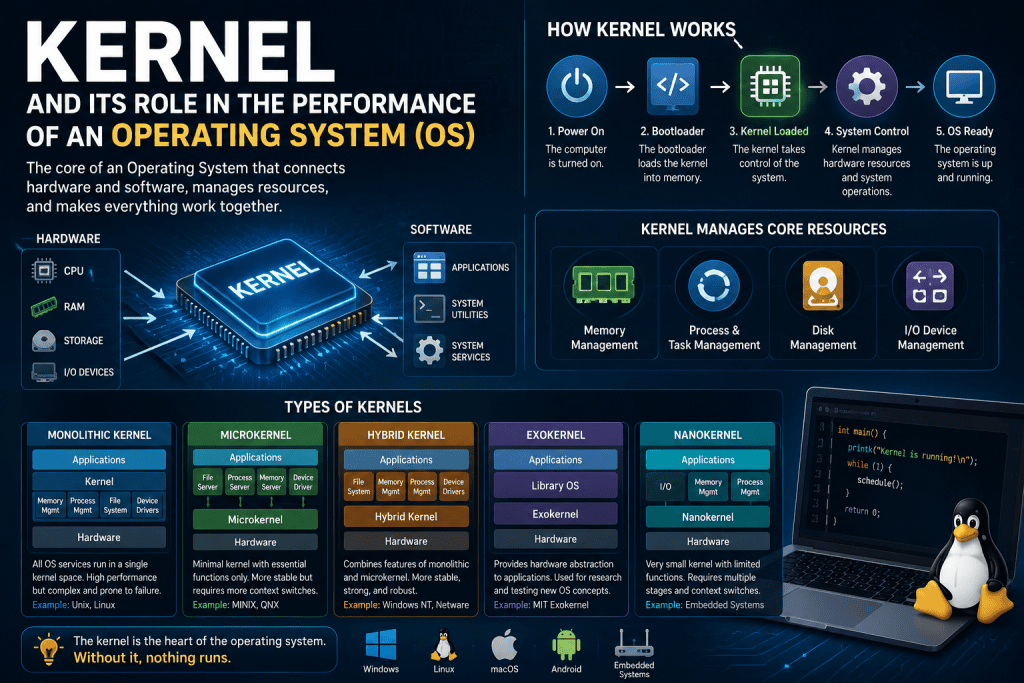
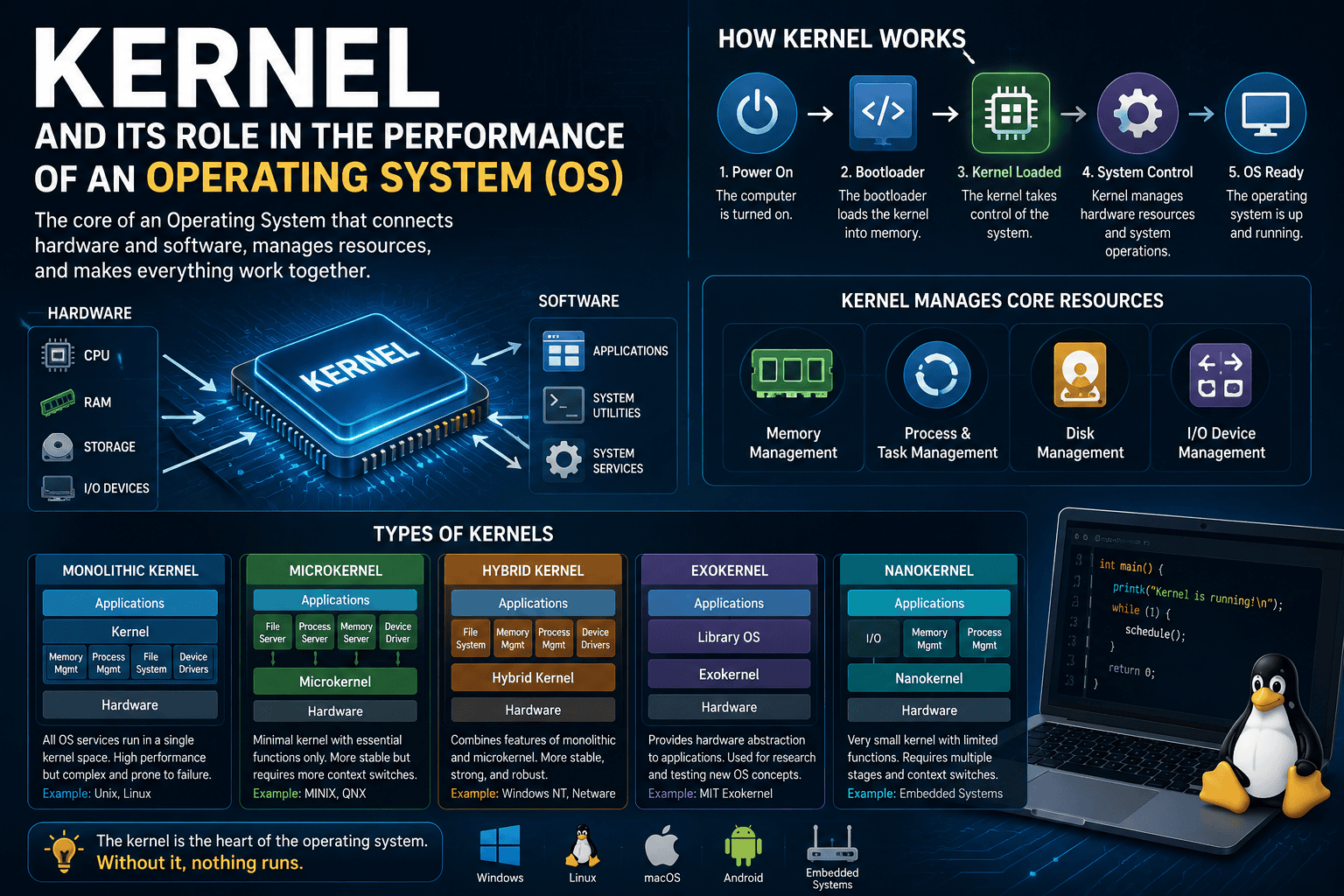
A kernel is the fundamental foundation of an operating system (OS). This system serves as the intermediary layer between a computer’s hardware and the operating system running on it. The primary task of the kernel is to enable the hardware to run applications and the operating system, and then load them into the main memory. The kernel supports hardware operations by managing memory management, process management, and task management. In addition, the kernel is also responsible for disk management.
How the Kernel Works
The kernel begins its work when a computer device is powered on. During this initial process, the bootloader activates the kernel and loads it into the computer’s memory. The kernel immediately takes on the role of controlling the system’s operations.
Once the kernel is activated in the computer’s memory, the computer’s input/output system automatically transfers control to the kernel. From this point onward, all processes from startup until the operating system becomes active are controlled by the kernel. This process can also be managed through the desktop environment.
This is why the kernel is crucial during the initial activation stage of an operating system on a computer. When the system is damaged, this startup process will automatically be disrupted and may even fail to load completely.
Types of Kernels You Can Use
Based on the explanation above, it can be understood that the kernel plays a significant role in bridging hardware performance to support the functions of applications and operating systems. To fulfill this role, various types of kernels are available depending on system requirements. The types of kernels are as follows:
Monolithic Kernel
A type of kernel that operates within a dedicated space where all operating system services are centralized. Although it offers good performance, this system is considered vulnerable and complex. You can find this type in Unix and Linux operating systems.
Microkernel
A kernel with a minimalist design that supports virtual memory and thread scheduling. It is generally more stable because it carries a lighter workload, but it requires more planning and context switches.
Hybrid Kernel
A type of kernel that combines the characteristics of Monolithic and Microkernels. It operates in a more stable manner while also being stronger and more robust. It is commonly used in Windows NT and NetWare operating systems.
Exokernel
A type of kernel with more complex programming but a more focused design. It is often used to test a new application or operating system in order to observe the rare steps and behavior of the new system.
Nanokernel
A type of kernel that is relatively uncommon because its operation requires multiple stages and several context switches. This type provides hardware abstraction without system services.
That is a brief overview of kernels and the types of kernels available. It can be concluded that the kernel is an important component that enables hardware to function within an operating system or application.
Conclusion
The kernel is a core component of an operating system that serves as the primary bridge between hardware and software. Through the management of various resources such as memory, processes, tasks, and storage devices, the kernel ensures that all computer components can work together in a coordinated manner, allowing applications and operating systems to function properly.
The kernel’s operation begins as soon as the computer is powered on, when the bootloader loads the kernel into memory and transfers system control to it. In addition, there are various types of kernels, including monolithic kernels, microkernels, hybrid kernels, exokernels, and nanokernels, each with its own characteristics and advantages depending on the operating system’s requirements.
Understanding the concept of a kernel helps us see how operating systems work behind the scenes. Therefore, let us continue to deepen our knowledge of operating systems and computer technology so that we can utilize and develop technology more effectively in the future.
References
Silberschatz, A., Galvin, P. B., & Gagne, G. (2018). Operating system concepts (10th ed.). John Wiley & Sons.
Love, R. (2010). Linux kernel development (3rd ed.). Addison-Wesley Professional.
Arpaci-Dusseau, R. H., & Arpaci-Dusseau, A. C. (2018). Operating systems: Three easy pieces. Arpaci-Dusseau Books.
Red Hat. (n.d.). What is the Linux kernel? https://www.redhat.com/en/topics/linux/what-is-the-linux-kernel
IBM. (n.d.). What is a kernel? https://www.ibm.com/topics/kernel
Telkom University (PuTI). (2023). Pengertian kernel. https://it.telkomuniversity.ac.id/