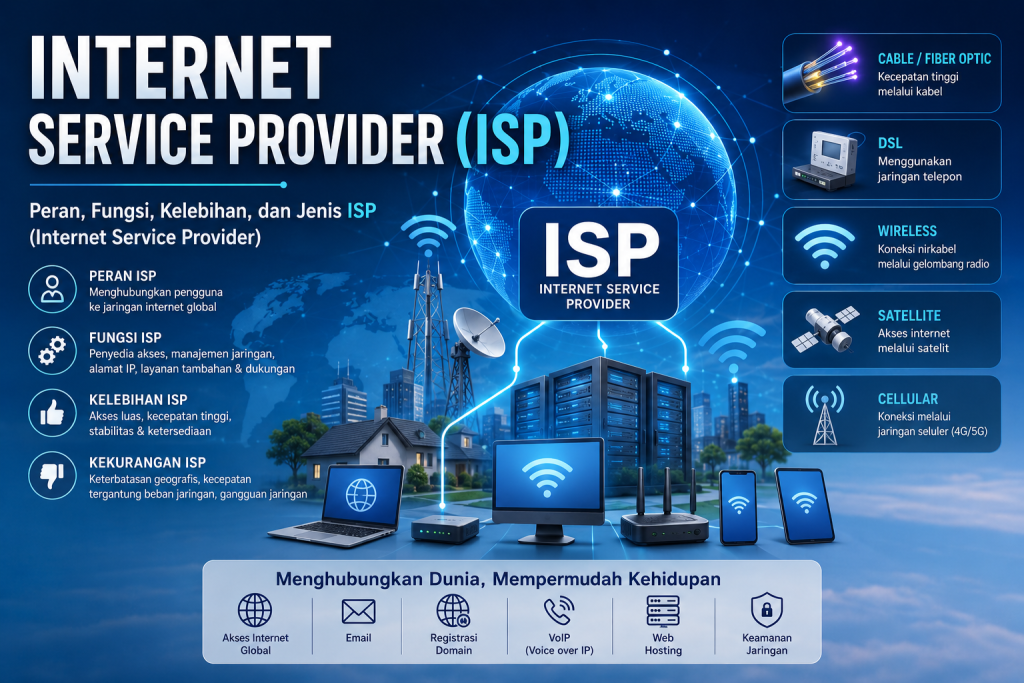


What is an ISP? An ISP (Internet Service Provider) is the primary key to connecting users to the internet through various types of services such as cable, DSL, wireless, satellite, and cellular networks.
What is an ISP?
ISP stands for Internet Service Provider. An ISP is a company or organization that provides internet access services to users. ISPs act as the connection between internet users and the global internet network, while also offering additional services such as email, domain registration, VoIP (Voice over Internet Protocol) services, and web hosting.
ISPs also provide the infrastructure, hardware, and internet connectivity required for users to access the internet through cable, DSL (Digital Subscriber Line), fiber optic, wireless, satellite, or cellular network technologies.
How an ISP Works
An ISP connects to one or more high-speed network lines. ISPs are not dependent on a single telecommunications service. Larger ISPs have access to higher-capacity network connections, enabling them to provide better services to their customers.
ISPs are connected to backbone networks, which are the primary infrastructures that connect ISPs with one another and provide access to various content and services around the world. Connections to backbone networks enable ISPs to provide global internet access to users.
Functions of an ISP
An ISP (Internet Service Provider) has several primary functions in providing internet access services to users. The following are some of the main functions of an ISP:
Internet Access Provider
The primary function of an ISP is to provide internet access to users. They offer various types of internet connections, such as cable, DSL, fiber optic, wireless, or cellular networks, allowing users to connect to the internet.
IP Address Provider
Every device connected to the internet requires a unique IP (Internet Protocol) address. ISPs assign IP addresses to users so that their devices can be identified and communicate with other devices on the internet.
Network Management
ISPs are responsible for managing their network infrastructure. They build and maintain physical networks, hardware (such as routers, switches, and servers), and software required for users to connect to the internet smoothly.
Additional Service Provider
In addition to internet access, ISPs often provide additional services to users. These may include web hosting, online storage, email services, VoIP, security services, and more. These additional services expand the functionality available to users beyond basic internet access.
Customer Support Provider
ISPs usually provide customer support to help users resolve technical issues or obtain information about the services offered. Customer support may include telephone assistance, live chat, or ticketing systems to handle inquiries, complaints, or technical problems.
It is important to note that the roles and functions of ISPs may vary depending on the type and size of the ISP, as well as the legal and regulatory environment in the country where they operate.
Advantages and Disadvantages of ISPs
The following are some of the advantages and disadvantages of ISPs.
Advantages of ISPs
ISPs offer several advantages, including:
Wide Internet Access
ISPs provide extensive and widespread internet access, allowing users to connect easily from various locations. They build and manage network infrastructures that cover large areas, including urban and rural regions.
High Speed
ISPs strive to provide high-speed internet services to users. They continuously develop new technologies and networks to improve speed and service quality, enabling users to enjoy better experiences such as high-quality video streaming and lag-free online gaming.
Stability and Availability
ISPs work hard to maintain the stability and availability of their networks. They conduct regular monitoring and maintenance to prevent or resolve network disruptions. This ensures that users can connect to the internet reliably and access online services at any time.
Disadvantages of ISPs
ISPs also have several disadvantages, including:
Geographic Limitations
Not all regions or locations within a country have equal internet coverage. Some areas, such as rural or remote regions, are difficult to reach with ISP infrastructure. This results in limited internet access for residents in those locations.
Speed Depends on Network Load
The internet speed promised by an ISP may vary depending on the time and network traffic. During periods when many users access the internet simultaneously, speeds may decrease due to high network load. This can affect user experience and lead to inconsistent service quality.
Network Disruptions
Although ISPs strive to maintain network stability, disruptions can still occur, causing temporary internet outages. These disruptions may result from hardware failures, technical issues, or natural disasters that affect network infrastructure. Such interruptions can impact internet connectivity and users’ access to online services.
Types of ISPs
There are several types of ISPs based on how they provide internet access and the services they offer. The following are some common types of ISPs:
Cable ISP
Cable ISPs use coaxial cable or fiber optic infrastructure to provide internet access. They typically offer high-speed internet services through existing cable television networks in homes or buildings.
DSL ISP
DSL (Digital Subscriber Line) ISPs use standard telephone lines to provide internet access. They utilize DSL technology, which allows data transmission over telephone lines separately from voice communication. DSL ISPs can provide relatively fast internet access, depending on the distance between the customer and the ISP service center.
Wireless ISP
Wireless ISPs provide internet access using wireless networks such as Wi-Fi or other wireless technologies. They use base stations and antennas to transmit wireless signals to customer devices, enabling internet access without cables.
Wireless ISPs are commonly used in rural areas or locations that are difficult to reach with cable infrastructure.
Satellite ISP
Satellite ISPs use communication satellites to provide internet access. They send and receive signals through satellites orbiting the Earth, which are then received by satellite dishes installed at customers’ homes or buildings.
Satellite ISPs are generally used in remote areas where other infrastructure is unavailable.
Cellular Network ISP
Cellular network ISPs provide internet access through mobile networks such as 4G or 5G. They utilize existing cellular infrastructure to offer internet services through SIM cards and mobile devices.
In addition, there are ISPs that provide specialized services, such as business ISPs that offer dedicated internet services for companies, public ISPs that provide internet access in public places such as cafes or parks, and specialized ISPs that provide internet services for specific purposes, such as internet access on cruise ships or airplanes.
It is important to note that the types of ISPs available may vary depending on the country, region, and the level of development of information and communication technology infrastructure in a particular location.
Discover more about ISP fundamentals at Private Universities in Jakarta to expand your technical understanding and networking knowledge.