




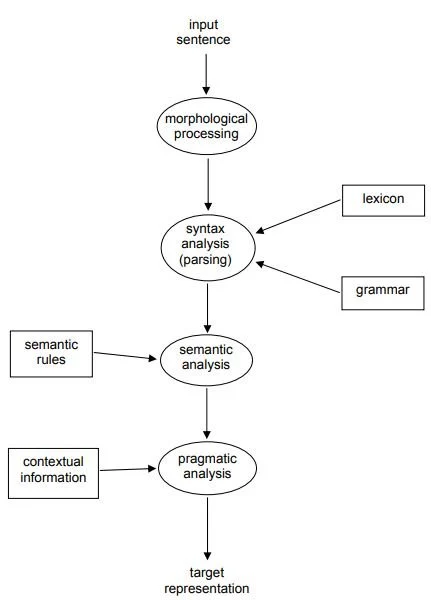
Every time you ask a voice assistant for the weather, get an instant translation of a foreign menu, or receive a surprisingly relevant autocomplete suggestion while typing an email, you’re witnessing Natural Language Processing (NLP) in action. NLP is the branch of artificial intelligence that allows computers to read, understand, interpret, and generate human language. It sits at the intersection of linguistics, computer science, and machine learning, and it’s the technology quietly powering much of the digital communication we now take for granted.
What Exactly Is Natural Language Processing?
At its core, NLP is about teaching machines to make sense of language that was never designed for computers in the first place. Human language is messy — full of slang, sarcasm, ambiguity, and cultural context — which makes it far harder for a machine to process than structured data like numbers in a spreadsheet.
- Natural Language Understanding (NLU) focuses on interpreting the meaning behind text or speech.
- Natural Language Generation (NLG) focuses on producing coherent, human-like text as output.
- Together, these two processes allow systems to hold conversations, summarize documents, translate languages, and answer questions.
NLP doesn’t require a computer to “understand” language the way a human does emotionally or intuitively. Instead, it relies on statistical patterns and mathematical representations of words and their relationships.
Want to know more about how Natural Language Processing (NLP) works? Read about Natural Language Processing (NLP): Definition and Applications on our page.
How Computers Turn Words Into Numbers
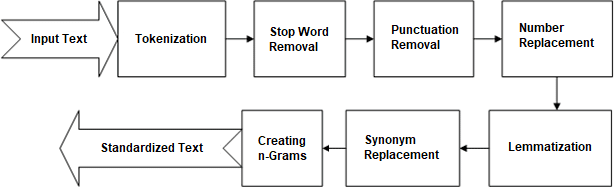
Since computers can only process numerical data, the first challenge in NLP is converting text into a numerical format the machine can work with. This transformation happens through several key steps:
- Tokenization: Breaking a sentence into smaller units, such as words or subwords.
- Text normalization: Standardizing text by removing punctuation, correcting case, and eliminating unnecessary symbols.
- Vectorization / word embeddings: Converting words into numerical vectors that capture their meaning and relationships, so words with similar meanings end up mathematically closer to each other.
- Feature extraction: Identifying which parts of the data (word frequency, sentence structure, context) matter most for a given task.
This numerical representation allows algorithms to detect patterns — for instance, recognizing that “happy” and “joyful” are more closely related than “happy” and “table.”
From Rules to Deep Learning: How NLP Has Evolved
Early NLP systems in the 1990s and 2000s relied heavily on hand-crafted grammar rules and simple statistical models. These systems were rigid and struggled with the natural variability of human language. The rise of deep learning changed everything, introducing models that could learn language patterns directly from massive datasets rather than relying on manually written rules.
A clear example of this evolution can be seen in Indonesian-language NLP research. Romadhony, Al Faraby, Rismala, and Nurwidaningrum (2023), researchers affiliated with Telkom University, conducted a sentiment analysis study on a large Indonesian product review dataset comprising over 700,000 reviews, comparing multiple feature representation and classification methods to determine which approach most accurately captured the sentiment expressed by everyday consumers. Their study highlights a broader point: building reliable NLP systems for languages beyond English requires large, high-quality datasets and careful methodological comparison, since language-specific slang, structure, and expression can significantly affect model accuracy.
Key Techniques Powering Modern Language Processing
Modern NLP systems combine several techniques to interpret and generate language effectively:
- Named Entity Recognition (NER): Identifies names of people, places, organizations, and dates within text.
- Part-of-speech tagging: Labels each word according to its grammatical role, such as noun, verb, or adjective.
- Sentiment analysis: Determines whether a piece of text expresses a positive, negative, or neutral tone.
- Machine translation: Converts text from one language to another while attempting to preserve meaning and context.
- Transformer models: Use “attention mechanisms” to weigh the importance of different words in a sentence relative to one another, allowing for much richer context understanding than earlier models.
Transformer-based architectures, in particular, represent a major leap forward. Unlike older sequential models that processed words one at a time, transformers can analyze an entire sentence — or even a whole document — simultaneously, capturing long-range relationships between words far more effectively.
Real-World Applications Shaping Everyday Life
NLP is no longer confined to research labs; it’s embedded in tools people use daily:
- Virtual assistants like voice-activated smart speakers rely on NLP to interpret spoken commands.
- Customer service chatbots use NLP to understand queries and generate relevant responses.
- Search engines use NLP to interpret the intent behind a search query, not just match keywords.
- Content moderation systems use NLP to detect harmful or inappropriate language at scale.
- Email and writing assistants use NLP to suggest corrections, completions, and tone adjustments in real time.
If this glimpse into how machines process language has sparked your curiosity, our other articles explore these applications in much greater depth — from how sentiment analysis shapes brand strategy to how transformer models power today’s most advanced AI chatbots. Reading further will help you connect these foundational NLP concepts to the tools already shaping your everyday digital experience.
Conclusion
Natural Language Processing has transformed the way computers engage with human communication, moving from rigid, rule-based systems to sophisticated models capable of understanding nuance and generating coherent text. By converting language into numerical representations and learning patterns from massive datasets, NLP systems now power everything from voice assistants to real-time translation tools. Yet these systems remain fundamentally statistical — they detect patterns in language rather than truly “understanding” meaning the way humans do. As NLP technology continues to advance, staying informed about how it works helps both businesses and everyday users make smarter, more critical use of these increasingly powerful tools. We invite you to continue exploring our website for more articles that unpack the technology reshaping how machines read, write, and communicate.
Frequently Asked Questions (FAQ)
1. How do computers understand human language if they can’t think like humans?
They convert words into numerical representations and use statistical patterns learned from large datasets to predict meaning, rather than genuinely comprehending language emotionally or intuitively.
2. What is the difference between NLP and a chatbot?
NLP is the underlying technology that allows machines to process language, while a chatbot is one application built using NLP to hold conversations with users.
3. Why is NLP harder for some languages than others?
Languages with fewer available datasets, more complex grammar, or heavier use of slang and informal expressions are generally harder for NLP models to process accurately.
References
- Romadhony, A., Al Faraby, S., Rismala, R., & Nurwidaningrum, U. (2023). Sentiment analysis on a large Indonesian product review dataset. Journal of Information Systems Engineering and Business Intelligence, 9(2), 194–208. https://doi.org/10.20473/jisebi.9.2.194-208 (Corresponding authors verified on institutional record, Telkom University, email domain: telkomuniversity.ac.id)
- Jurafsky, D., & Martin, J. H. (2024). Speech and Language Processing (3rd ed., draft). Pearson.
- Tunstall, L., von Werra, L., & Wolf, T. (2022). Natural Language Processing with Transformers. O’Reilly Media.
- Vajjala, S., Majumder, B., Gupta, A., & Surana, H. (2021). Practical Natural Language Processing: A Comprehensive Guide to Building Real-World NLP Systems. O’Reilly Media.
- Telkom University Open Library. (2024). A Course in Natural Language Processing. Telkom University Press. https://repositori.telkomuniversity.ac.id/catalogue/2024.html