




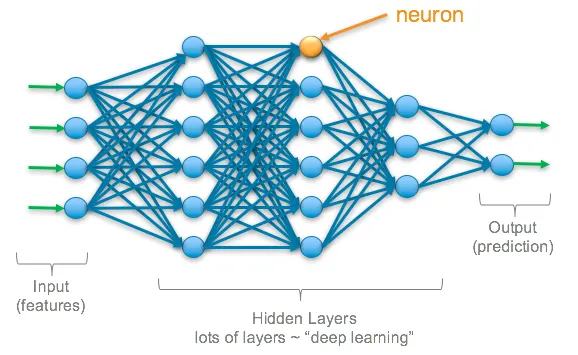
Artificial Intelligence (AI), Machine Learning (ML), and Deep Learning (DL) are three of the most talked-about terms in technology today, yet many people still use them interchangeably. This confusion is understandable — the three concepts are closely related and often overlap in real-world applications. However, each term represents a distinct layer of technology, and understanding the difference is essential for anyone who wants to work with, invest in, or simply make sense of today’s AI-driven world.
What Is Artificial Intelligence?
Artificial Intelligence is the broadest of the three terms. It refers to any system or machine designed to mimic human intelligence and perform tasks that typically require human reasoning, such as problem-solving, decision-making, and language understanding.
- AI is the umbrella concept that covers all forms of “smart” technology, including rule-based systems and robotics.
- It does not always involve learning from data — some AI systems simply follow pre-programmed logic (often called “symbolic AI” or “expert systems”).
- Examples include chatbots, recommendation engines, spam filters, and voice assistants like Siri or Alexa.
Researchers describe AI as any technique that enables computers to imitate human behavior and decision-making to solve complex problems, whether through hard-coded rules, statistical models, or learning-based approaches (Janiesch et al., 2021). This means AI is less a single technology and more a broad research field with many different methods underneath it.
Read this article to know the detail about Artificial Intelligence: Artificial Intelligence: Definition, Benefits, and How It Works
What Is Machine Learning?
Machine Learning is a subset of AI. Instead of following fixed rules written by a programmer, ML systems learn patterns directly from data and improve their performance over time without being explicitly reprogrammed.
Key characteristics of Machine Learning:
- It relies on algorithms (such as decision trees, regression, or support vector machines) that identify patterns in structured data.
- The more relevant data it receives, the better it becomes at making predictions or classifications.
- It usually requires feature engineering, meaning humans still need to decide which data attributes matter most.
- Common applications include credit scoring, fraud detection, product recommendations, and medical diagnosis support.
For instance, a study by Suyanto, Meliana, Wahyuningrum, and Khomsah (2022), affiliated with Telkom University, proposed a nearest neighbor–based machine learning framework for diabetes classification and found that a well-designed ML approach could outperform certain deep learning models while remaining far more interpretable for clinical use. This illustrates an important point: bigger and more complex models like deep learning are not always the best choice — sometimes a simpler, well-tuned machine learning model delivers better and more explainable results.
What Is Deep Learning?
Deep Learning is a specialized subset of Machine Learning that uses artificial neural networks with multiple layers (hence “deep”) to automatically learn representations from raw data.
- DL does not require manual feature engineering; it learns features on its own directly from raw inputs like images, audio, or text.
- It performs exceptionally well with large, unstructured datasets.
- It generally requires far more computational power and data volume than traditional ML.
- Typical use cases include facial recognition, self-driving cars, natural language processing, and generative AI tools like image or text generators.
Deep learning models are essentially a more advanced and data-hungry evolution of machine learning, built to solve problems that shallow models struggle to handle, such as recognizing objects within millions of images (Janiesch, Zschech, & Heinrich, 2021).
How the Three Concepts Relate to Each Other
Think of these three concepts as nested circles:
- Artificial Intelligence is the largest circle — the overall goal of building intelligent machines.
- Machine Learning sits inside AI — a specific approach that learns from data.
- Deep Learning sits inside Machine Learning — an even more specialized approach using layered neural networks.
In short: all Deep Learning is Machine Learning, and all Machine Learning is AI, but not all AI is Machine Learning, and not all Machine Learning is Deep Learning.
Practical Differences at a Glance
- Data requirements: AI systems can work with little to no data (rule-based); ML needs moderate structured data; DL needs massive datasets.
- Human involvement: AI (rule-based) needs manual rule-writing; ML needs feature selection; DL largely automates feature extraction.
- Hardware needs: Basic AI can run on standard computers; ML runs comfortably on regular servers; DL usually needs GPUs or specialized chips.
- Interpretability: Traditional ML models are generally easier to explain; DL models often act as “black boxes.”
- Best use case: AI for automation logic, ML for structured data prediction, DL for unstructured data like images and speech.
If this comparison sparked your curiosity about how these technologies are applied in real industries, our other articles dive deeper into specific use cases — from how machine learning powers fraud detection systems to how deep learning is reshaping healthcare diagnostics. Exploring those pieces will give you a much richer, practical picture beyond these foundational definitions.
Conclusion
Artificial Intelligence, Machine Learning, and Deep Learning are not competing technologies — they are layered concepts, each building upon the one before it. AI is the broad ambition of creating intelligent machines, ML is the data-driven method to achieve parts of that ambition, and DL is the most advanced technique within ML, powered by neural networks. Understanding these distinctions helps professionals, students, and business leaders choose the right tool for the right problem instead of treating “AI” as a one-size-fits-all buzzword. As these fields continue to evolve rapidly, staying informed through credible, well-referenced resources is the best way to keep up — and we invite you to browse more of our articles to continue building your understanding of this fascinating field.
Frequently Asked Questions (FAQ)
1. Is Deep Learning always better than Machine Learning?
Not necessarily. Deep Learning tends to perform better on large, unstructured datasets, but traditional Machine Learning can be faster, cheaper, and more interpretable for smaller or structured datasets.
2. Can AI exist without Machine Learning or Deep Learning?
Yes. Some AI systems are built purely on fixed rules and logic (rule-based systems) without any data-driven learning involved.
3. Do I need to learn Machine Learning before Deep Learning?
It is highly recommended. Understanding core Machine Learning concepts, such as data preprocessing and model evaluation, provides the foundation needed to grasp how Deep Learning models work.
References
- Janiesch, C., Zschech, P., & Heinrich, K. (2021). Machine learning and deep learning. Electronic Markets, 31(3), 685–695. https://doi.org/10.1007/s12525-021-00475-2
- Suyanto, S., Meliana, S., Wahyuningrum, T., & Khomsah, S. (2022). A new nearest neighbor-based framework for diabetes detection. Expert Systems with Applications, 199, 116859. https://doi.org/10.1016/j.eswa.2022.116859 (Author profile verified on Google Scholar, Telkom University, institutional email domain: telkomuniversity.ac.id)
- Géron, A. (2022). Hands-On Machine Learning with Scikit-Learn, Keras, and TensorFlow (3rd ed.). O’Reilly Media.
- Russell, S., & Norvig, P. (2021). Artificial Intelligence: A Modern Approach (4th ed.). Pearson.
- Telkom University Open Library. (2023). Machine Learning dan Deep Learning. Telkom University Press. https://openlibrary.telkomuniversity.ac.id/pustaka/231311/machine-learning-dan-deep-learning.html