


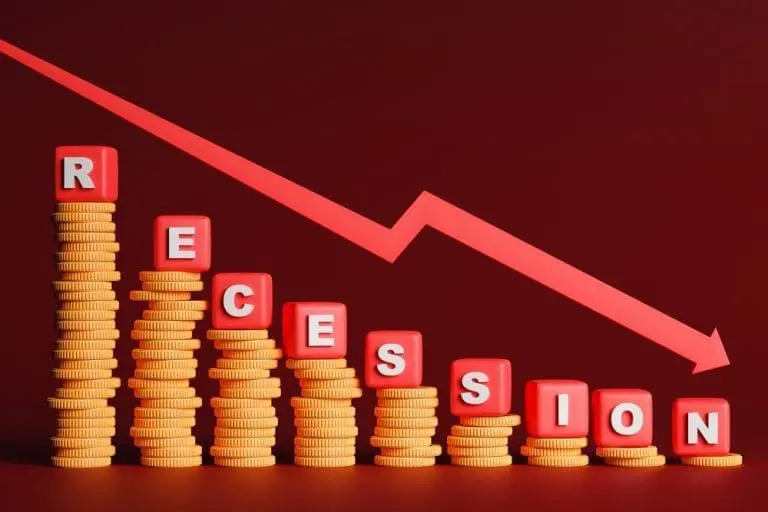

The term recession became a major topic of concern as people approached 2023. Public interest in the concept surged as discussions about a potential economic downturn became increasingly widespread. But what exactly is a recession, and what causes it?
Definition of a Recession
A recession is an economic term that describes a period in which a country’s economy slows down or experiences a significant decline.
This economic slowdown typically occurs when a country’s Gross Domestic Product (GDP) decreases for two consecutive quarters. During this period, economic activity weakens, affecting businesses, employment, and consumer spending.
Factors That Cause a Recession
There are several factors that can trigger a recession within a country. Some of the most common causes include:
1. Inflation
The first factor is inflation, which refers to the continuous increase in the prices of goods and services.
Rising prices reduce consumers’ purchasing power, which can lead to lower demand for products and services. As demand decreases, businesses may reduce production levels.
If this condition continues over an extended period, it can contribute to a recession due to increasing unemployment, mass layoffs, and rising poverty levels.
2. Excessive Deflation
Just as inflation can be harmful, deflation can also negatively impact the economy and potentially trigger a recession.
Deflation occurs when the prices of goods and services consistently decline over time. While lower prices may seem beneficial at first, prolonged deflation often leads to reduced business revenues and lower wages.
As companies earn less income, they may cut costs by reducing investments or laying off employees, which can further weaken economic growth.
3. Sudden Economic Shocks
Another common cause of recession is a sudden economic shock.
Economic shocks can arise from unexpected events such as financial crises, natural disasters, pandemics, geopolitical conflicts, or major market disruptions. These events can significantly reduce consumer spending and business activity.
Economic difficulties are often accompanied by growing debt burdens. As debt accumulates, interest payments increase, making it more difficult for individuals and businesses to meet their financial obligations. In severe cases, this can lead to loan defaults and broader economic instability.
4. Technological Development
Technological advancement can also contribute to economic disruption under certain circumstances.
As technologies such as artificial intelligence (AI), automation, and robotics become increasingly sophisticated, some traditional jobs may become obsolete. If workforce adaptation and reskilling efforts do not keep pace with technological change, unemployment rates may rise.
As a result, reduced employment opportunities and higher unemployment levels can place additional pressure on the economy.
Conclusion
A recession is a challenging economic condition that can affect governments, businesses, and individuals alike. It is characterized by a sustained decline in economic activity and can be caused by factors such as inflation, excessive deflation, sudden economic shocks, and rapid technological changes.
Understanding the causes of a recession is essential for individuals and organizations to prepare for potential economic challenges and make informed financial decisions. While recessions can create difficulties, appropriate economic policies, innovation, and workforce adaptation can help countries recover and achieve long-term economic stability.