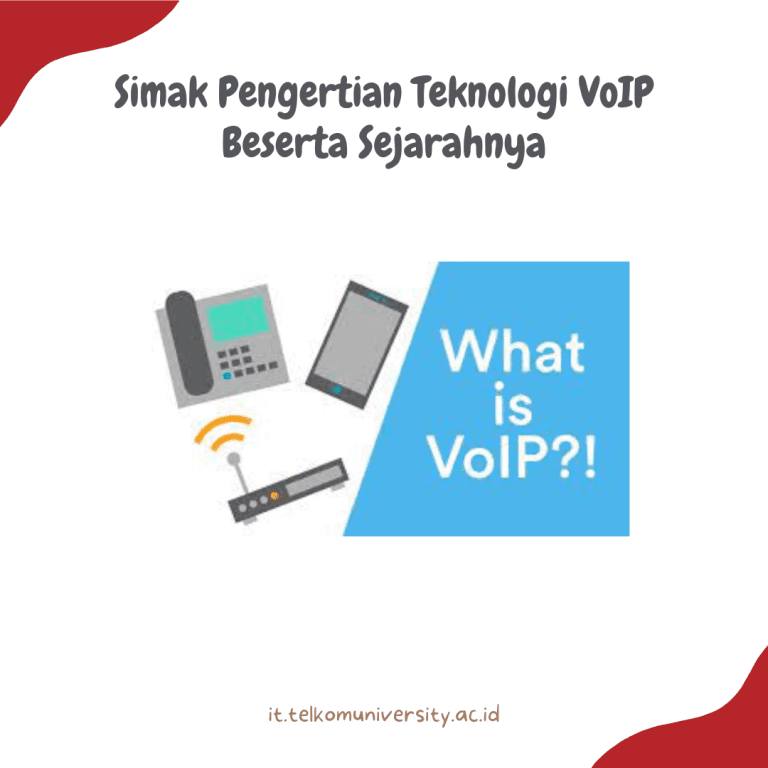

VoIP (Voice over Internet Protocol) is a technology that enables voice communication over the internet. Learn about the history of VoIP, its types, advantages, disadvantages, and benefits in this article.
What is VoIP?
VoIP (Voice over Internet Protocol) is a technology that allows voice transmission in the form of data over the internet or IP networks. This technology enables users to make phone calls via the internet by converting analog voice signals into digital data and transmitting them through IP networks.
VoIP allows users to communicate at a lower cost compared to traditional telephone systems.
History of VoIP
The history of VoIP began in 1973, when ARPANET (Advanced Research Projects Agency Network) developed a technology called Network Voice Protocol (NVP).
Later, in 1995, the first VoIP application was developed by VocalTec with a product called InternetPhone.
In 1998, Cisco Systems released the first VoIP technology that utilized dedicated hardware specifically designed to process voice packets. Then, in 2003, Skype was launched, leading to a rapid increase in VoIP adoption worldwide.
Over time, VoIP technology continued to evolve and was adopted by various organizations and businesses, including major telecommunications operators. Today, VoIP has become a primary alternative to traditional telephony due to its lower cost and ability to provide high-quality voice communication along with additional features such as voice conferencing, video calls, and more.
Advantages of VoIP
1. Lower Cost
VoIP uses the internet as the medium for transmitting voice data, making communication costs significantly lower than traditional telephone services.
2. Easy to Use
VoIP systems are relatively easy to use, even for people with little technical knowledge.
3. Easy Integration
VoIP can be easily integrated with other applications such as email, video conferencing, and instant messaging platforms.
4. High Mobility
VoIP allows users to remain connected using the same phone number even while traveling abroad or working from different locations.
5. More Features
VoIP offers more features than traditional telephones, including conference calling, call forwarding, voicemail, and more.
Disadvantages of VoIP
1. Dependent on Internet Connection
VoIP requires a stable and fast internet connection to function properly. Poor connectivity can negatively affect voice quality.
2. Vulnerable to Security Threats
VoIP systems can be exposed to cyber threats such as viruses, malware, and hacking attempts, potentially compromising user security and privacy.
3. Inconsistent Voice Quality
Voice quality can vary depending on internet speed and the devices being used. At times, audio may be crystal clear, while at other times it may sound distorted or unclear.
4. Hardware Dependency
Some VoIP implementations require specialized hardware, such as VoIP-enabled phones, which may be a limitation for users who do not have such equipment.
You May Also Like : 5G Revolution: How High-Speed Connectivity Is Transforming the Way We Work
Types of VoIP
There are several types of VoIP technologies, including:
1. ATA (Analog Telephone Adapter)
ATA is the most common type of VoIP. It is typically used by businesses or individuals who want to connect traditional analog telephones to the internet.
2. IP Phones
IP Phones are specialized telephones designed to connect directly to the internet through Ethernet or Wi-Fi networks. They are commonly used by companies and small-to-medium-sized businesses.
3. Softphone
A Softphone is a VoIP application that can be installed on laptops, tablets, or smartphones. It allows users to make voice calls, video calls, and conference calls over the internet.
4. WebRTC
WebRTC (Web Real-Time Communication) is a VoIP technology that enables users to make voice and video calls directly through a web browser without downloading additional applications. It has become increasingly popular among web developers because it is easy to implement and free to use.
Benefits of VoIP
Some of the key benefits of using VoIP include:
1. Cost Savings
Compared to traditional phone calls, VoIP can significantly reduce communication expenses by utilizing internet connectivity.
2. Easy Accessibility
VoIP allows users to make and receive calls anytime and anywhere, as long as they have an internet connection.
3. Additional Features
VoIP offers a wide range of advanced features, including voicemail, call forwarding, caller ID, and conference calling.
4. Business Application Integration
VoIP can be integrated with business applications such as Customer Relationship Management (CRM) systems and project management software, helping improve productivity and operational efficiency.
5. Scalability
VoIP systems can be easily scaled to meet the needs of both small and large organizations.
6. Improved Voice Quality
As VoIP technology continues to evolve, voice quality has improved significantly. Some VoIP services now offer audio quality that rivals or even exceeds traditional telephone systems.
Conclusion
VoIP (Voice over Internet Protocol) is a communication technology that enables voice transmission over internet networks by converting analog voice signals into digital data. Since its early development on the ARPANET network, VoIP has evolved into one of the most widely used modern communication solutions.
Compared to traditional telephone systems, VoIP offers numerous advantages, including lower communication costs, ease of use, high mobility, and advanced features such as voice conferencing, video calling, and integration with various digital applications. Additionally, VoIP is available in several forms, including ATA, IP Phones, Softphones, and WebRTC, allowing users to choose the solution that best fits their needs.
However, VoIP also has certain limitations, such as dependence on internet connectivity, potential security risks, and occasional fluctuations in voice quality. Despite these challenges, VoIP remains an efficient, flexible, and continuously evolving communication technology that supports modern communication needs in the digital era.
References
- Telkomsel. VoIP: Definition, Functions, Examples, and How It Works.
- Netmonk. About VoIP.
- Next Generation of PABX. Understanding VoIP for Business Professionals.
- Adroni, N. (2008). Development of VoIP on IT Telkom’s Existing Network Using IT Telkom IP-PBX and Asterisk Server (Bachelor’s Thesis). Telkom University.
Author: PuTi